

The Guest Chooses Before the Booking Page: How Boutique Hotels Can Win in AI-Powered Travel Search

A boutique hotel once entered the traveler’s decision at a predictable moment: a search result or booking platform displayed a list of properties, the guest compared photographs and rates, and the hotel website tried to close the sale.
That sequence is changing. AI-powered search can now synthesize an answer before the traveler opens a booking page, which means a property may be evaluated, compared, and mentally shortlisted earlier than its marketing team realizes. For independent hotels, the new competitive question is not only whether the site ranks. It is whether the property has published enough precise, useful evidence to be understood as the right fit for a specific trip.
The Decision Is Moving Upstream
Google says AI Mode is designed for nuanced questions, complex comparisons, and follow-up exploration, and that its systems may use “query fan-out” to search across related subtopics and sources.
AI hotel is therefore no longer competing only for a phrase such as “boutique hotel Lisbon.” It may be considered across several connected questions: neighborhood character, breakfast timing, airport access, accessibility, family fit, street noise, local dining, workspace, and the emotional tone of the stay. Generic claims such as “timeless elegance” or “exceptional service” do not resolve those questions. Specificity does. (Source: Google Search Central, “AI Features and Your Website,” updated December 10, 2025.)
The Hotel’s Unfair Advantage Is Local Knowledge
This shift favors hotels that know exactly what kind of experience they provide. A large booking platform can compare inventory, price, and review scores, but it rarely communicates the property’s lived reality with the precision of the people operating it.
The hotel knows which rooms receive the softest morning light, which floor suits a light sleeper, which nearby restaurant serves late arrivals, whether the courtyard is active after dinner, and how the walk to the museum feels with luggage or a child. That knowledge is commercially valuable only when it leaves staff memory and becomes clear, searchable, guest-facing content.

Build Answer-Ready Content, Not Content Volume
The strongest content system begins with real traveler intent, not a list of abstract keywords. Review the questions guests ask before booking, after confirmation, and during arrival. Organize them into decision categories such as location, room fit, timing, transportation, food, accessibility, work, families, celebrations, weather, and local experience. Then publish one definitive page for each high-value question. A page about an early departure should state breakfast hours, takeaway options, transfer timing, and what must be arranged in advance. A page about a quiet three-day stay should explain who the itinerary suits, what is walkable, where rest enters the day, and what tradeoffs the guest should understand.
Google’s current guidance says there is no special AI-only schema or secret markup required for inclusion in AI Overviews or AI Mode.
The fundamentals remain crawlable pages, helpful people-first text, internal links, accurate structured data, strong images, and current business information. That is useful discipline for hotel leaders: do not chase a mysterious optimization trick. Improve the factual quality, accessibility, and usefulness of the property’s existing knowledge. (Source: Google Search Central, “AI Features and Your Website,” updated December 10, 2025.)
Conversion Depends on Removing Fit Uncertainty
A hotel website often prioritizes aspiration while postponing practical detail. AI-powered discovery reverses that priority because the system is trying to determine whether the property fits a particular request. Missing information becomes a commercial weakness.
A traveler deciding between two beautiful hotels may choose the one that clearly explains room layout, evening atmosphere, transfer process, breakfast experience, accessibility, or distance to the places that matter.
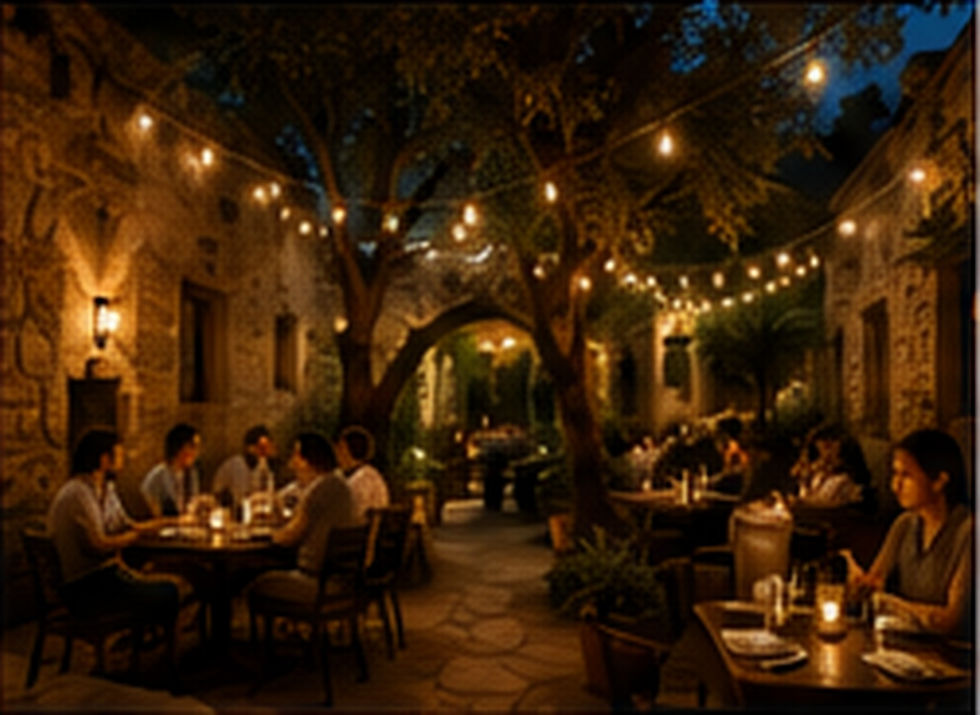
The winning content removes uncertainty without flattening the romance of travel. Editorial photography should support that job: a room image should reveal scale and light, a service image should show a genuine moment of preparation, and a courtyard image should communicate the mood of an evening.
Personalization Makes Positioning More Important
Google has also demonstrated travel-related personalization in AI Mode, including suggestions shaped by past searches and connected travel confirmations, with user control over those connections. The strategic implication is that discovery may become increasingly contextual: the same destination can produce different recommendations for a food-focused couple, a family, a business traveler, or someone returning to a familiar neighborhood.
Boutique hotels should respond by defining their best-fit guest more clearly.
Who thrives here?
What rhythm does the property support?
What kind of neighborhood experience surrounds it?
Which expectations should be corrected before booking?
A property that tries to appear perfect for everyone becomes harder to recommend with confidence. (Source: Google, “AI in Search: Going Beyond Information to Intelligence,” May 20, 2025.)
Turn the Website Into an Extension of the Concierge
The operational opportunity is larger than SEO. When high-value answers are published clearly, the hotel can reduce repetitive pre-arrival questions, improve direct-booking confidence, align guest expectations, and give front-desk teams a stronger reference point.
The website becomes an extension of the concierge rather than a decorative brochure. Each useful page should connect naturally to room pages, location information, the booking engine, and related local guidance. The system does not need endless content. It needs a controlled library of accurate answers that the property can maintain.
Actionable Takeaways: A 30-Day Visibility Reset
Start with five actions.
First, collect the twenty questions that appear most often before booking and arrival.
Second, identify which answers exist only in staff memory, emails, or private messages.
Third, publish five high-intent pages that resolve a specific traveler decision.
Fourth, connect those pages through clear internal links from room, location, and booking pages.
Fifth, review the content quarterly so hours, services, transportation details, accessibility information, and neighborhood recommendations remain accurate. Measure more than traffic: track room-page visits, booking-engine sessions, direct inquiries, longer stays, and whether repetitive questions decline.
The Booking Page Is Becoming the Confirmation Point
The booking page is becoming the confirmation point, not always the persuasion point.
Boutique hotels that publish precise local expertise, honest fit signals, and vivid proof of the stay can enter the decision earlier, before a traveler has reduced the choice to price and availability.
AI search does not remove the value of hospitality. It increases the value of making hospitality legible.
The property that explains itself with the intelligence of a concierge and the clarity of an operator will be easier to discover, easier to trust, and easier to choose.
OrionPilot
OrionPilot helps businesses turn real operational knowledge into clear strategy, distinctive content, and measurable weekly execution—so AI-powered discovery leads to qualified demand, not generic visibility.


Comments