

Escape Rooms Have a Replay Problem.

Updated: Jul 31
The timer reaches zero. A group spills into the lobby comparing wrong turns, celebrating the final lock, and retelling the moment someone discovered the hidden key. Behind them, the game master begins rebuilding the room for strangers.
The experience may have been excellent. It also destroyed its own repeatability. The players now know the sequence, the surprises, and the answer. A restaurant can sell a favorite meal again. An escape-room operator usually cannot sell the same room to the same group twice.
That makes retention a peculiar marketing problem. The first sale must create demand for something the customer has not yet experienced: another story, another group, another occasion, or a reason to introduce someone else.
The First Sale Consumes the Room
An escape room is sold as a contained adventure, but its commercial value continues beyond the final clue. The room produces memories, group identity, social proof, and a judgment about whether the venue understands pacing, hospitality, difficulty, and fun.
When marketing focuses entirely on the room’s theme, that larger value disappears. The campaign works hard to sell a prison break, a lost laboratory, or a buried treasure. Once that story is solved, the relationship has nowhere obvious to go. The customer remembers the fiction but may not remember why the venue deserves the next evening out.
The stronger promise belongs one level above the room. It can be the quality of the challenge, the pleasure of solving together, the host’s ability to read the group, or the confidence that each experience will feel distinct. A venue with that identity can retire a room without retiring the customer relationship.
The Debrief Is the Next Sales Surface
The minutes after the game carry unusual attention. The group is still emotionally inside the experience. People want to understand the clue they missed, compare their performance, take a photograph, and decide whether the outcome was brilliance, luck, or chaos.
A rushed farewell throws that energy away. A thoughtful debrief converts it into meaning. The host can reveal one elegant mechanism, recognize how the group worked together, and suggest a different room based on what they enjoyed. The recommendation feels credible because it follows observed behavior rather than a generic upsell.
This is also when the venue can separate the people inside one booking. The organizer may care about planning the next birthday. Another player may be evaluating a workplace event. Someone else may simply want a harder room. One transaction has produced several possible demand paths, but they become visible only through conversation and a useful follow-up.

Retention Belongs to the Venue
A catalogue of rooms does not automatically become a reason to return. If every room is marketed as an isolated product, customers must restart the decision each time. They compare themes, prices, and reviews as if they had never visited before.
Venue-level retention changes the question. Instead of asking whether the customer wants another version of the same night, marketing can show how the next experience differs: more theatrical, more collaborative, less frightening, better for children, more suitable for a larger group, or built around another occasion.
That requires honest distinction. Three rooms with different wallpaper but the same puzzle rhythm will eventually weaken the promise. Marketing cannot manufacture variety that operations did not design. The customer journey therefore reaches backward into product development: future rooms, seasonal events, mobile games, team formats, and host-led experiences need clear reasons to exist.
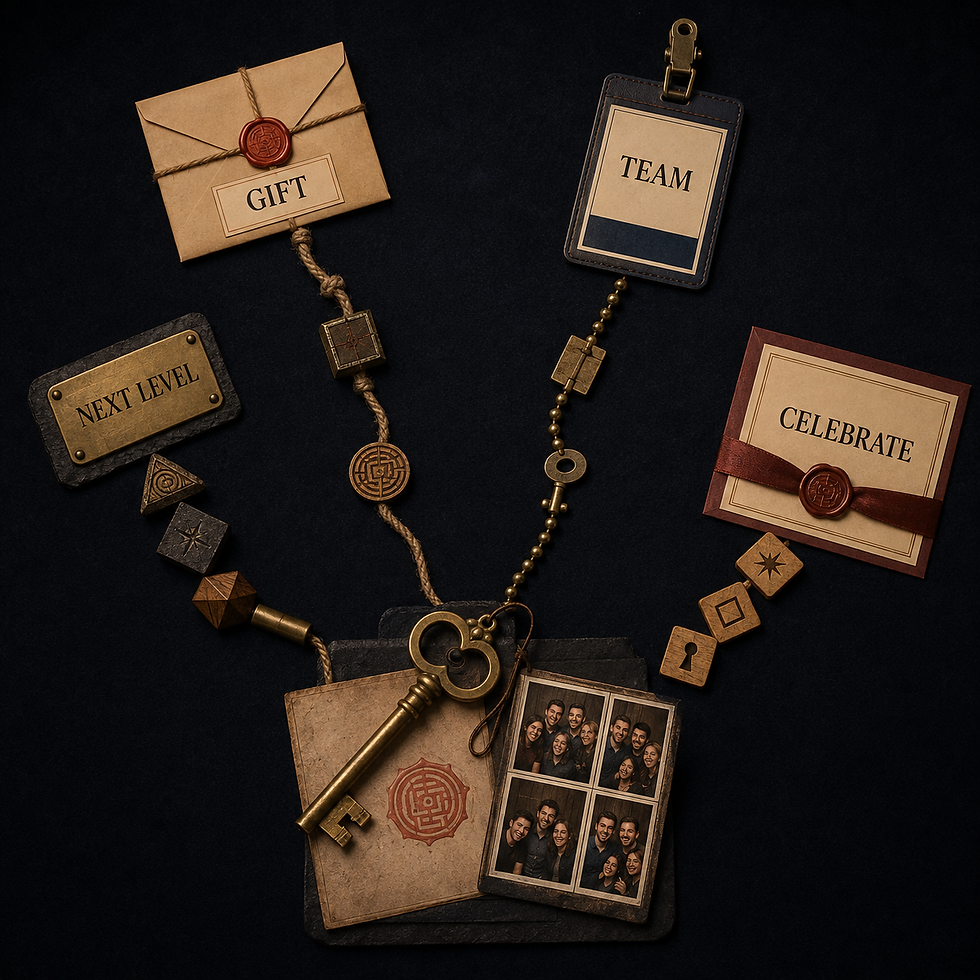
One Completed Game Can Create Several Futures
The solved room has value as evidence. A group photograph can trigger a referral. A difficulty record can support a better recommendation. A birthday visit can introduce a corporate organizer. A first-time player can become the person who assembles the next group.
These paths do not need to be forced into one loyalty message. They need continuity. The venue should remember which room was completed, who organized the visit, the size and character of the group, and which kind of experience would genuinely extend the relationship.
OrionPilot’s Strategy Interview and Strategy Summary can establish the audience, offer, proof, constraints, and growth priorities that this communication should preserve. For an escape-room business, that strategic baseline helps keep room promotions, group-event messaging, and follow-up content connected to one venue promise rather than turning each new theme into an unrelated campaign.
Replay Means a New Occasion
An escape-room customer may never replay the same product. That does not make the business permanently dependent on strangers. It means repeat demand must be designed around progression and social circulation.
The next purchase can come from a harder room, a different cast of friends, a family visit, a workplace event, a gift, or a newly launched story. The operator’s task is to make those futures visible while the first experience is still vivid.
The final lock ends the room. Good marketing makes sure it does not end the relationship.


Comments