
The Repair You Cannot Undo: How Rare-Book Conservators Price Judgment, Risk, and Restraint.

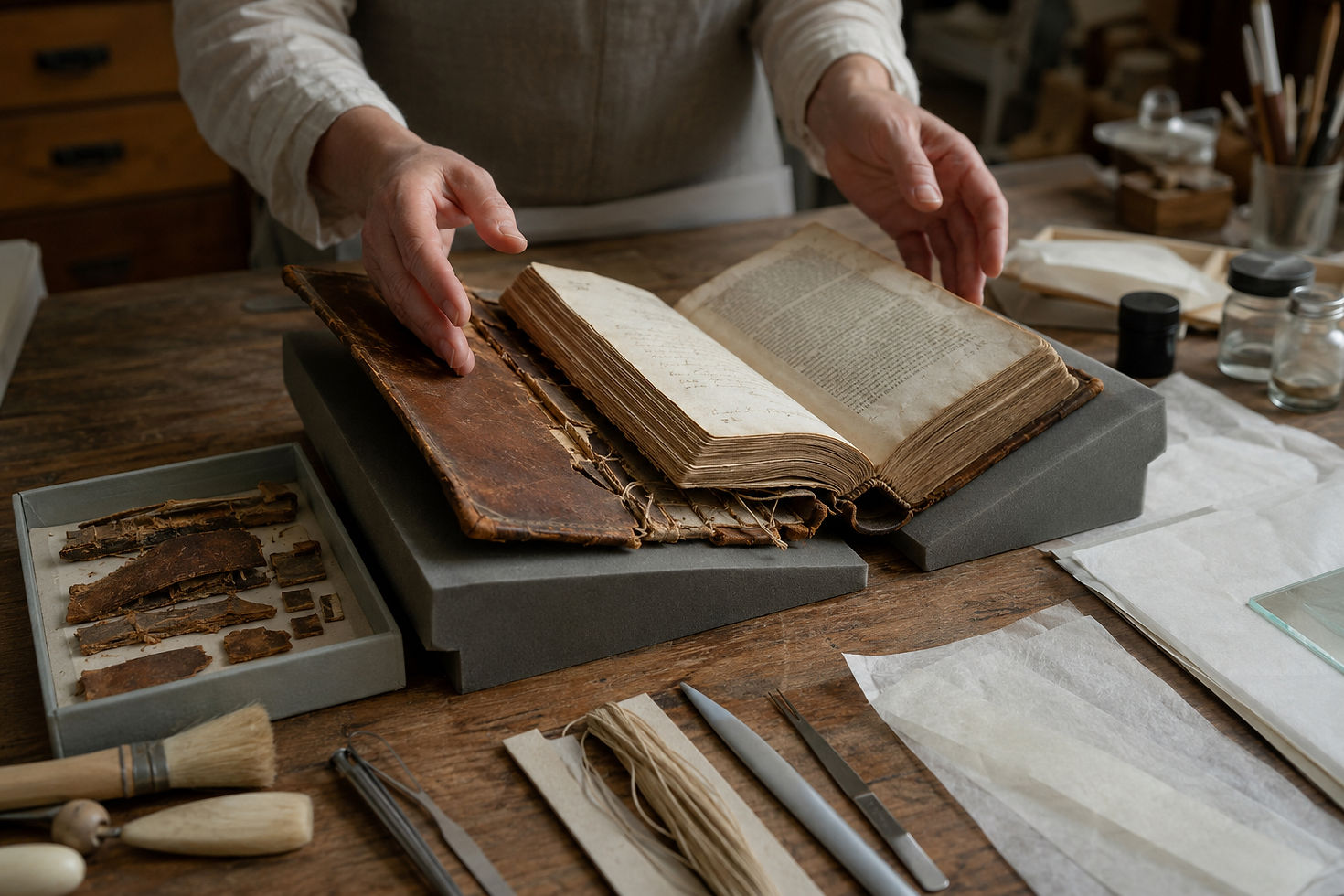
An eighteenth-century book arrives in a conservation studio with a split board, brittle sewing, and a history no invoice can fully describe. The owner may see a damaged object waiting to be repaired. The conservator sees a sequence of irreversible choices. A new spine can make the volume easier to handle, but it may erase evidence of how the book was made. Cleaning can reveal color, but it can also remove marks that belong to the object’s life.
For independent conservation studios, this tension is the business. They are not paid simply to make old things look new. They are paid to judge what should be stabilized, what should remain visible, and what should not be touched at all. That makes pricing, communication, and capacity unusually complex. The most valuable work often appears modest because the intervention was deliberately limited.
Conservation Is Not Restoration Theater
Clients frequently arrive with a visual expectation: straighten the cover, replace the missing leather, brighten the page, make the book presentable. A professional conservator begins somewhere less dramatic. What is the object made of? Which elements are original? What is actively deteriorating? How will the book be used after treatment? A family Bible handled once a year requires a different solution from a manuscript scheduled for exhibition or a reference volume used by researchers.
The distinction matters because appearance is only one measure of success. A beautiful repair can be structurally inappropriate. A nearly invisible repair can create false confidence about what is original. The conservator’s first responsibility is not transformation. It is to preserve evidence while making the object safer to handle, store, or display.
The Estimate Is a Risk Map
Quoting conservation work is difficult because the full condition of an object is rarely visible at intake. Adhesives may behave differently once humidified. Pigments may be water-sensitive. Earlier repairs can conceal damage or introduce materials that react badly with a new treatment. The estimate therefore needs to describe uncertainty, not hide it behind a single confident number.
A strong proposal separates examination, stabilization, optional aesthetic work, housing, and documentation. It also explains decision points: what can be confirmed before treatment, what may only become clear during treatment, and what requires client approval if conditions change. This is not defensive paperwork. It protects the object, the client, and the studio from pretending that fragile material behaves like a standardized product.

Restraint Is Part of the Deliverable
In many businesses, visible activity signals value. Conservation reverses that assumption. The expert may recommend doing less, delaying treatment, changing the storage environment, or building a protective enclosure instead of altering the book. To a client expecting a dramatic repair, restraint can look like hesitation. In reality, it may be the highest form of professional judgment.
Studios need language that makes non-intervention legible. The client should understand what risk is being avoided, which original features are being preserved, and what future options remain open because the treatment is reversible or minimal. The value is not only in what the conservator adds. It is also in what the conservator refuses to remove.
Documentation Turns Judgment Into Value
A completed treatment is only half the product. The other half is the record: condition photographs, material observations, tests, treatment steps, products used, changes from the proposal, and recommendations for storage or handling. This documentation allows a future conservator, curator, dealer, librarian, or family member to understand what happened without guessing.
For the studio, consistent records also turn individual expertise into institutional memory. They make complex work easier to review, support more accurate estimates, and reveal which materials or object types create repeated surprises. Documentation should never become an administrative performance detached from the bench. It should capture the decisions that another qualified person would need in order to act responsibly later.
The Client Is Buying Future Options
The most thoughtful treatment does not force every future owner into the conservator’s present-day taste. It stabilizes the object while preserving as much evidence and flexibility as possible. That principle changes the client conversation. The question is not merely, “How will it look when finished?” It is also, “What will still be possible ten or fifty years from now?”
This is especially important when market value, family meaning, research value, and physical condition point in different directions. A commercially attractive rebinding may reduce historical evidence. A visibly imperfect cover may be central to provenance. The conservator helps the client understand those trade-offs without pretending that one form of value automatically outranks all others.

Capacity Should Follow Complexity, Not Volume
Independent studios can damage both quality and cash flow by accepting work according to object count alone. Ten straightforward enclosures may be easier to schedule than one uncertain manuscript treatment. Capacity planning should consider examination time, drying time, specialist materials, consultation, photography, curing, client approvals, and the possibility that the object must remain undisturbed between stages.
A useful queue distinguishes predictable production work from investigative work. The first can support steady throughput. The second requires protected thinking time and financial room for uncertainty. When every project is promised against the same calendar, the most complex objects create delays that spread across the entire studio.
Technology Belongs Around the Object
Digital tools can improve intake records, image organization, estimate templates, approval history, environmental monitoring, and treatment documentation. They can help a studio see which projects are waiting on a client, which materials need ordering, and where estimated hours repeatedly differ from actual hours.
But the object itself resists shortcuts. A model cannot feel the pull of a weak sewing structure, notice a subtle tide line under raking light, or decide whether a stain carries historical meaning. Technology is most useful when it reduces clerical friction around the bench, leaving more attention for examination, hand skill, and judgment.
Takeaways
Price examination and uncertainty explicitly rather than hiding them inside a fixed repair fee. Separate structural stabilization from optional aesthetic work. Explain restraint as a professional outcome, not an absence of service. Treat documentation as part of the finished product. Plan capacity by complexity and decision load, not by object count. Use digital systems to protect records and workflow while keeping treatment decisions grounded in material evidence.
OrionPilot
OrionPilot helps specialized independent businesses turn complex judgment, project evidence, and client expectations into clearer operating decisions. The goal is not to standardize expertise. It is to build a business model capable of protecting it.


Comments